
Control Airborne Dust with Effective Water Mist Technology
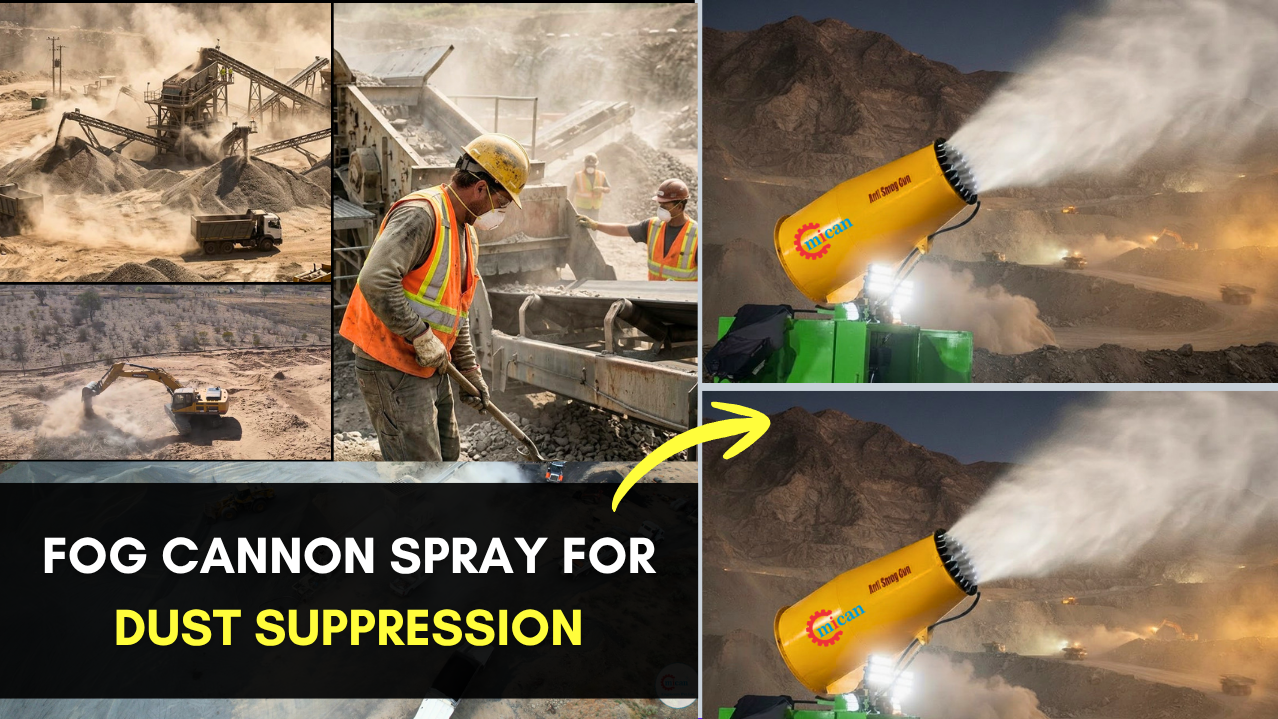
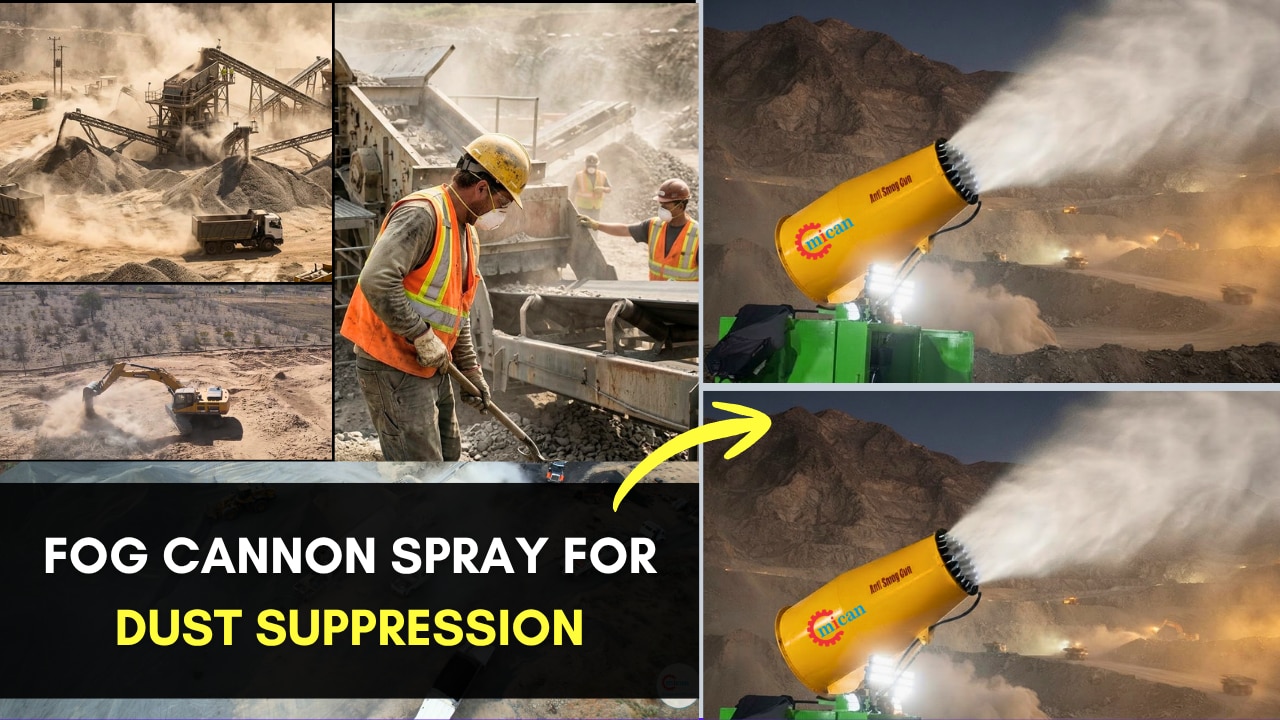
Dust is a major challenge at stone crushing plants, construction sites, mining operations, and bulk material handling facilities. Activities such as crushing, screening, cutting, drilling, excavation, and material transfer release fine dust particles into the surrounding air.
Excessive airborne dust can reduce air quality, affect worker comfort and health, decrease visibility, settle on machinery, and create environmental management challenges. Effective dust suppression is therefore an important part of maintaining cleaner and safer industrial working conditions.
Fog cannon spray systems provide a practical solution by dispersing fine water droplets into dusty areas, helping capture airborne particles and bring them down to the ground.
What Is a Fog Cannon Spray System ?
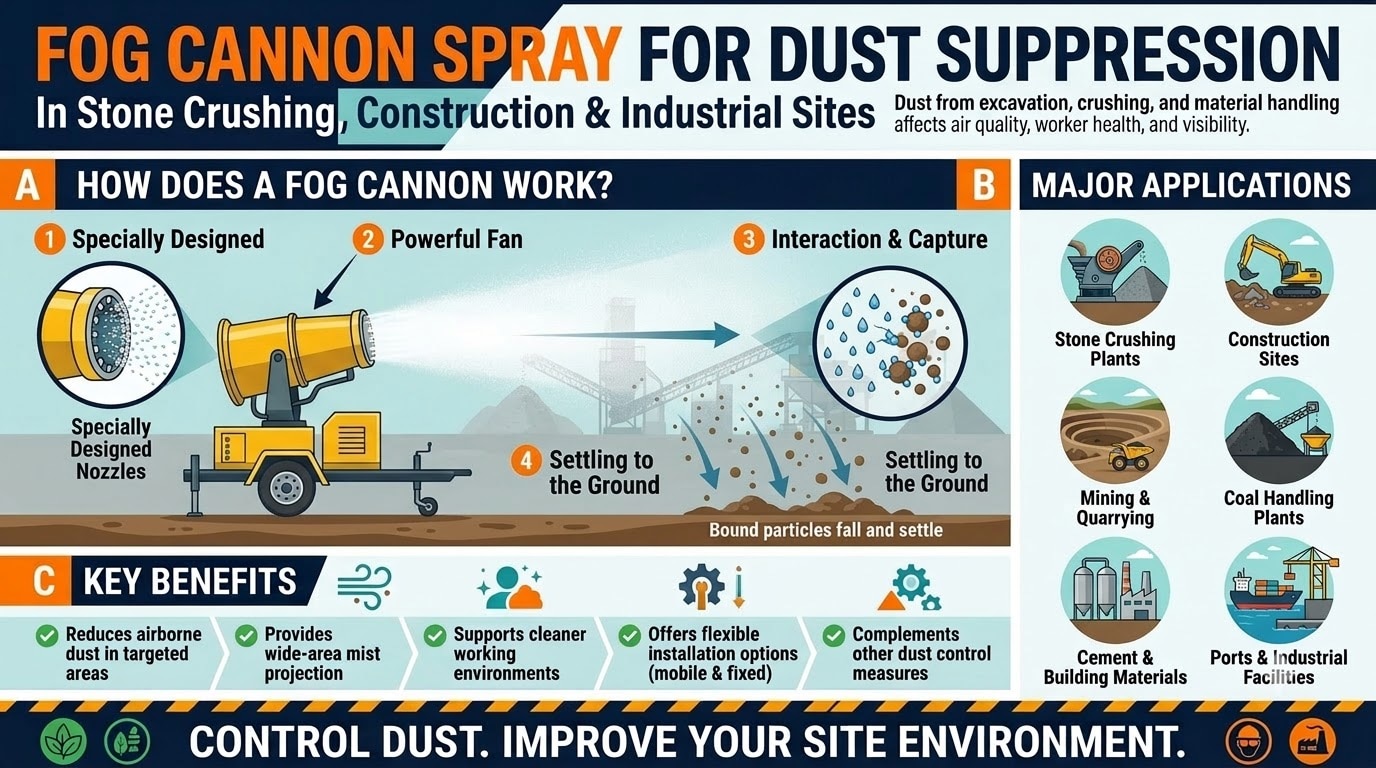
A fog cannon is a dust suppression system that uses a high-speed fan to project a fine water mist over a targeted area. Water is supplied to specially designed spray nozzles arranged around the cannon, producing droplets that mix with dust-laden air.
The fine droplets come into contact with airborne dust particles, helping them agglomerate and settle rather than remain suspended in the air.
Depending on the equipment design, nozzle configuration, operating pressure, wind conditions, and site requirements, fog cannons can cover a substantial area and can be installed as stationary, mobile, or remotely operated units.
How Does a Fog Cannon Work ?
The working principle of a fog cannon is based on water atomization, airborne droplet dispersion, and the interaction between water droplets and dust particles.
Step 1: Water Supply
Water is supplied from a suitable source through a pump and piping system to the spray nozzles installed around the fog cannon.
Step 2: Fine Mist Generation
The nozzles convert the supplied water into fine droplets. Droplet size depends on nozzle design, water pressure, flow rate, and other operating conditions.
Step 3: Mist Projection
A powerful fan generates an air stream that carries the water mist toward the dust-generating area. The cannon's direction and elevation can be adjusted according to the application.
Step 4: Dust Capture
Water droplets collide with airborne dust particles. When the droplets capture the particles, the resulting water-dust agglomerates become heavier and are more likely to settle.
Step 5: Dust Suppression
The process helps reduce airborne dust concentrations around the targeted area. Results depend on dust characteristics, weather, mist distribution, water quality, and the placement and operation of the equipment.
Major Applications of Fog Cannon Spray Systems :
1. Stone Crushing Plants and Aggregate Processing
Stone crushing plants generate dust during several stages of aggregate production, particularly where rocks are crushed, screened, conveyed, and transferred between equipment.
Fog cannons can be used around:
Jaw crushers and secondary crushing areas
Vibrating screens and screening plants
Conveyor belt transfer points
Aggregate stockpiles and loading areas
Material unloading and handling zones
Internal roads with dust generated by vehicle movement
They help suppress airborne dust around these operations and can complement local dust extraction, enclosure, and water spraying systems.
2. Construction Sites
Construction activities such as excavation, demolition, earthmoving, concrete cutting, and debris handling can generate considerable airborne dust.
Fog cannon systems may be used for:
Building demolition and debris clearance
Excavation and earthmoving operations
Road construction and infrastructure projects
Concrete batching and aggregate handling areas
Sand and soil stockpiles
Large construction sites with open dust-generating areas
Their ability to project mist across an open area can be useful where dust sources move or where multiple activities take place within the same zone.
3. Mining and Quarrying
Mining and quarry operations often involve drilling, blasting, crushing, loading, unloading, and transportation of mineral materials.
Fog cannons can help control airborne dust around:
Quarry crushing and screening plants
Mineral stockpiles
Loading and unloading points
Ore and aggregate transfer areas
Haul roads and material handling zones
For effective control, the cannon should be positioned according to the dust source, prevailing wind direction, and operating conditions.
4. Coal Handling Plants and Thermal Power Plants
Coal handling operations can generate dust during unloading, crushing, screening, conveying, and stockpiling.
Fog cannons may be installed near :
Coal stockyards
Conveyor transfer points
Coal unloading areas
Crushing and screening sections
Bulk material handling yards
Water quality, electrical safety, equipment corrosion, and the potential effects of moisture on the handled material must be considered when selecting a system.
5. Cement Plants and Building Material Industries
Cement, limestone, clinker, sand, and other bulk materials can generate dust during storage and handling.
Potential applications include:
Raw material stockyards
Limestone and aggregate handling areas
Open material transfer zones
Loading and unloading yards
Selected outdoor bulk material storage areas
The suitability of a fog cannon depends on the material, moisture sensitivity, dust characteristics, and the need to prevent excessive wetting.
6. Ports, Bulk Terminals and Material Storage Yards
Ports and industrial terminals handle large volumes of coal, minerals, aggregates, and other bulk materials. Wind can carry dust from open stockpiles and transfer operations.
Fog cannons can help suppress dust around stockpiles, material loading zones, and selected conveyor transfer areas, particularly where wide-area mist projection is required.
7. Waste Processing and Recycling Facilities
Waste sorting, crushing, shredding, and handling of construction and demolition waste can release airborne dust.
Fog cannon systems may be used around:
Construction waste processing areas
Concrete and rubble recycling plants
Outdoor waste handling zones
Selected material sorting and transfer areas
The system must be selected with appropriate consideration for water quality, contaminants, equipment hygiene, and runoff management.
Key Benefits of Fog Cannon Dust Suppression
Wide-area mist projection: Helps distribute water mist across open dust-generating areas.
Airborne dust reduction: Water droplets capture suitable airborne particles and promote settling.
Targeted operation: Direction and elevation can be adjusted to suit the dust source.
Flexible installation: Depending on the design, units can be stationary, mobile, or mounted on suitable vehicles or platforms.
Support for environmental management: Can form part of a broader site dust-control strategy.
Potential reduction in manual spraying: Mechanized mist projection can reduce the need for some manual water-spraying activities.
Adaptability to industrial operations: Different nozzle arrangements, pump capacities, and fan configurations can be selected according to site requirements.
Actual performance and water consumption depend on system design, operating conditions, and site layout. Fog cannons should be considered alongside source enclosure, local exhaust ventilation, extraction systems, or other appropriate controls rather than as a universal replacement for them.
Why Are Spray Nozzles Important in a Fog Cannon?
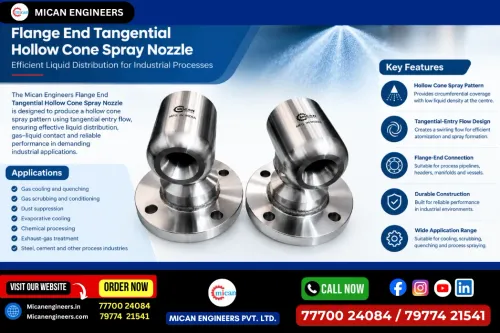
Spray nozzles are a key component of the fog cannon because they determine how water is broken into droplets and distributed before the fan projects the mist.
The nozzle arrangement and operating conditions influence:
Water droplet size and distribution
Water flow rate and operating pressure
Mist uniformity across the target area
Water consumption and pumping requirements
Resistance to clogging and wear
Performance with the available water quality
Nozzle selection should account for the required droplet characteristics, pump capacity, filtration, water quality, and the intended dust suppression application. The finest possible droplets are not automatically the best choice: droplets must be small enough to interact effectively with airborne dust but sufficiently well distributed and persistent under actual site conditions.
Choosing the Right Fog Cannon System :
Before selecting a fog cannon for a stone crusher, construction project, or industrial facility, evaluate the following :
Dust source: Identify whether dust originates from crushing, screening, stockpiles, material transfer, demolition, or vehicle movement.
Target coverage: Consider the area to be covered, the distance from the dust source, and obstructions at the site.
Dust characteristics: Particle size, material type, and dust concentration influence suppression performance.
Water supply: Confirm the available flow rate, pressure, water quality, and filtration requirements.
Environmental conditions: Wind speed, direction, temperature, and humidity can affect mist travel and dust capture.
Installation and mobility: Determine whether a stationary, mobile, or adjustable system best suits the operation.
Maintenance requirements: Consider nozzle cleaning, filter maintenance, pump servicing, and protection against wear or corrosion.
Site safety and compliance: Assess electrical safety, runoff, slip hazards, visibility, and applicable workplace exposure requirements.
Mican Engineers Pvt. Ltd. — Industrial Spray Solutions
Mican Engineers Pvt. Ltd. provides industrial spray nozzle solutions for a range of spray applications. For fog cannon and dust suppression projects, the spray nozzle selection should be matched to the required flow rate, operating pressure, droplet characteristics, water quality, and system configuration.
Whether the requirement involves a stone crushing plant, construction site, quarry, mining operation, or bulk material handling facility, selecting the appropriate spray technology is an important step toward an effective dust suppression system.
Looking for the right spray nozzles for your fog cannon or industrial dust suppression application ?
📞 Contact Mican Engineers Pvt. Ltd. to discuss your application requirements
77700 24084
79774 21541
📩 sales@micanengineers.com
🌐 Website: www.micanegineers.in
📍 Official Company Address :
Plot No.E5, Mican Engineers Pvt Ltd,
Behind Sachin Hotel MIDC Anand Nagar,
Ambernath (E),
India 421 506
( Mican Engineers Pvt. Ltd )
#FogCannon #DustSuppression #DustControl #IndustrialSprayNozzles #StoneCrusher #ConstructionIndustry #MiningIndustry #QuarryOperations #MaterialHandling #IndustrialSpraying #MicanEngineers
#dustsuppression #dustcontrol #dustsuppressed #crushingplants #cannonfogspray #fogspray #fogspraying #fogspraymachine #constructiondust #industrialdust
@mumbai @chennai @pune @ahmedabad