
SS304 vs SS316L Spray Nozzles – Where Are They Used ?
Selecting the correct material for an industrial spray nozzle is just as important as selecting the spray pattern, flow rate, pressure, and spray angle. Among the most commonly used stainless-steel materials are SS304 and SS316L.
Both offer good corrosion resistance and mechanical strength, but they are suited to different operating environments. The right choice depends on the fluid being sprayed, temperature, chemical exposure, cleaning process, hygiene requirements, and surrounding environment.
This guide explains the difference between SS304 and SS316L spray nozzles, where each material is commonly used, and how to select the appropriate option for your application.
What Are SS304 and SS316L ?
SS304 Spray Nozzles
SS304 (AISI 304) is one of the most widely used stainless-steel grades for industrial equipment.
It provides:
- Good corrosion resistance
- Good mechanical strength
- Good resistance to oxidation
- Easy fabrication and machining
- Good performance in general industrial environments
- Relatively economical compared with SS316L
SS304 is commonly selected when the sprayed liquid and operating environment are not highly corrosive.
SS316L Spray Nozzles :
SS316L (AISI 316L) contains molybdenum in addition to chromium and nickel. This provides improved resistance to chlorides, salts and many corrosive environments compared with SS304.
The “L” indicates low carbon content, which is particularly beneficial for welded components and equipment requiring good corrosion resistance after fabrication.
SS316L is widely used in applications where hygiene, corrosion resistance and chemical compatibility are important.
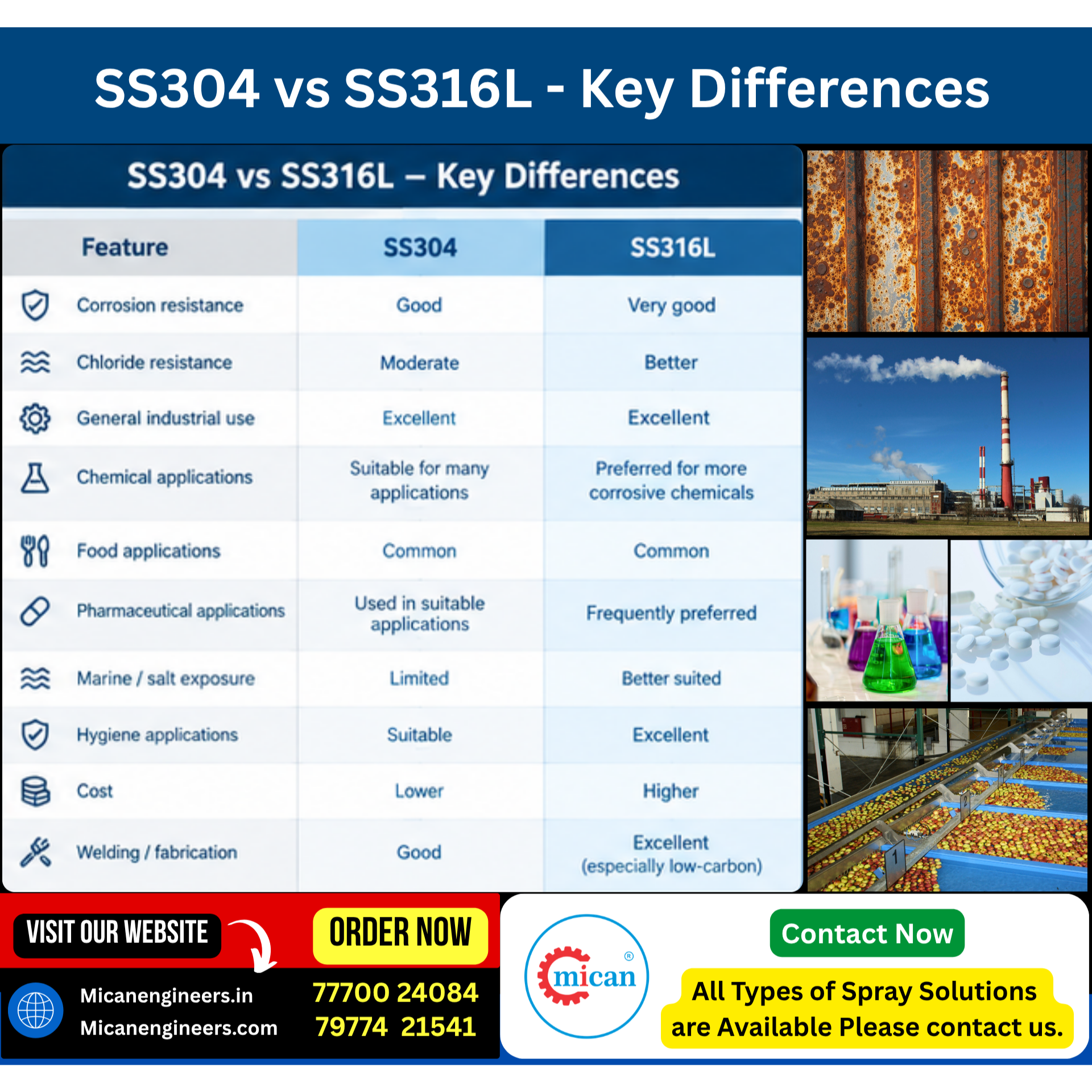
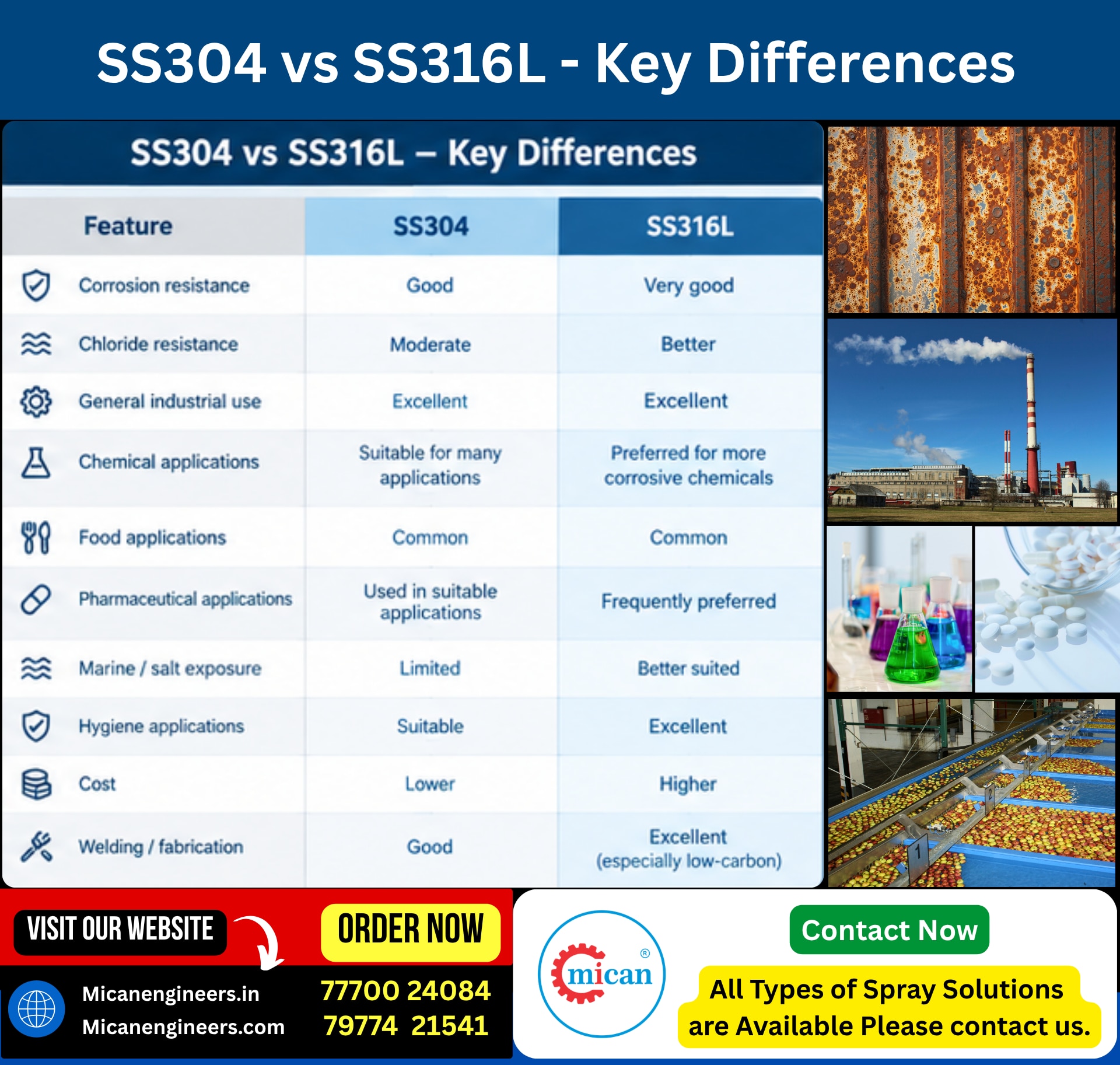
SS304 vs SS316L Spray Nozzles
| Feature | SS304 | SS316L |
|---|---|---|
| Corrosion resistance | Good | Very good |
| Chloride resistance | Moderate | Better |
| General industrial use | Excellent | Excellent |
| Chemical applications | Suitable for many applications | Preferred for more corrosive chemicals |
| Food applications | Common | Common |
| Pharmaceutical applications | Used in suitable applications | Frequently preferred |
| Marine/salt exposure | Limited compared with 316L | Better suited |
| Hygiene applications | Suitable | Excellent |
| Cost | Lower | Higher |
| Welding/fabrication | Good | Excellent, especially with low-carbon grade |
Important: Material selection should always be based on the actual chemical, concentration, temperature, pressure and exposure conditions rather than material grade alone.
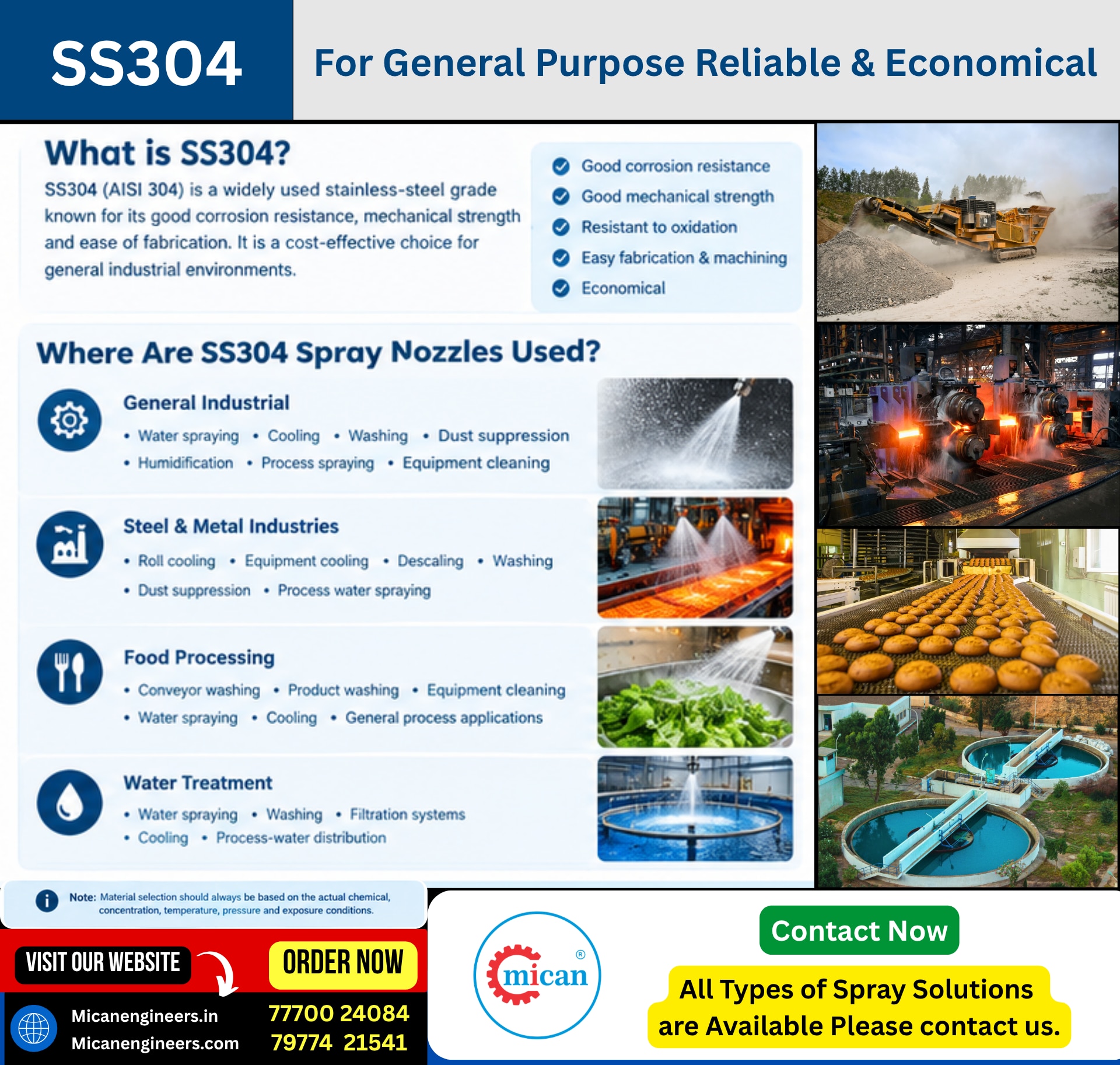
Where Are SS304 Spray Nozzles Used ?
SS304 spray nozzles are widely used for general industrial applications where extreme corrosion resistance is not required.
1. General Industrial Spraying
SS304 nozzles can be used for :
- Water spraying
- Cooling
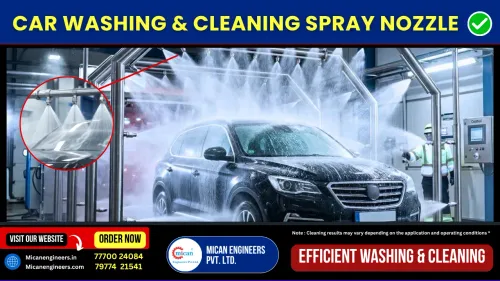
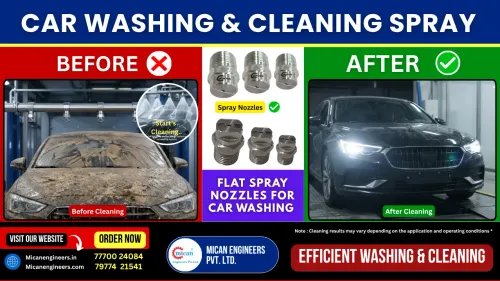
- Washing
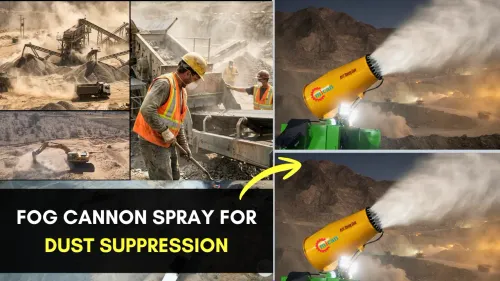
- Dust suppression
- Humidification
- General process spraying
- Equipment cleaning
For standard water-based applications, SS304 can often provide a cost-effective solution.
2. Steel and Metal Industries
Spray nozzles are used extensively in metal processing for :
- Roll cooling
- Equipment cooling
- Descaling
- Washing
- Dust suppression
- Process water spraying
SS304 can be suitable where the process water and surrounding conditions are compatible with the material.
However, applications involving high chloride levels, aggressive chemicals or particularly corrosive process conditions may require a more corrosion-resistant material.
3. Food Processing
SS304 is widely used in food-processing equipment because stainless steel provides a hygienic and cleanable surface.
Typical applications include :
- Conveyor washing
- Product washing
- Equipment cleaning
- Water spraying
- Cooling
- General process applications
For aggressive cleaning chemicals or applications requiring greater corrosion resistance, SS316L may be considered.
4. Water Treatment
SS304 nozzles can be used in selected water-treatment applications, particularly for relatively non-aggressive water.
Applications may include :
- Water spraying
- Washing
- Filtration systems
- Cooling
- Process-water distribution
However, water chemistry is important. Chlorides and other contaminants can significantly affect stainless-steel selection.
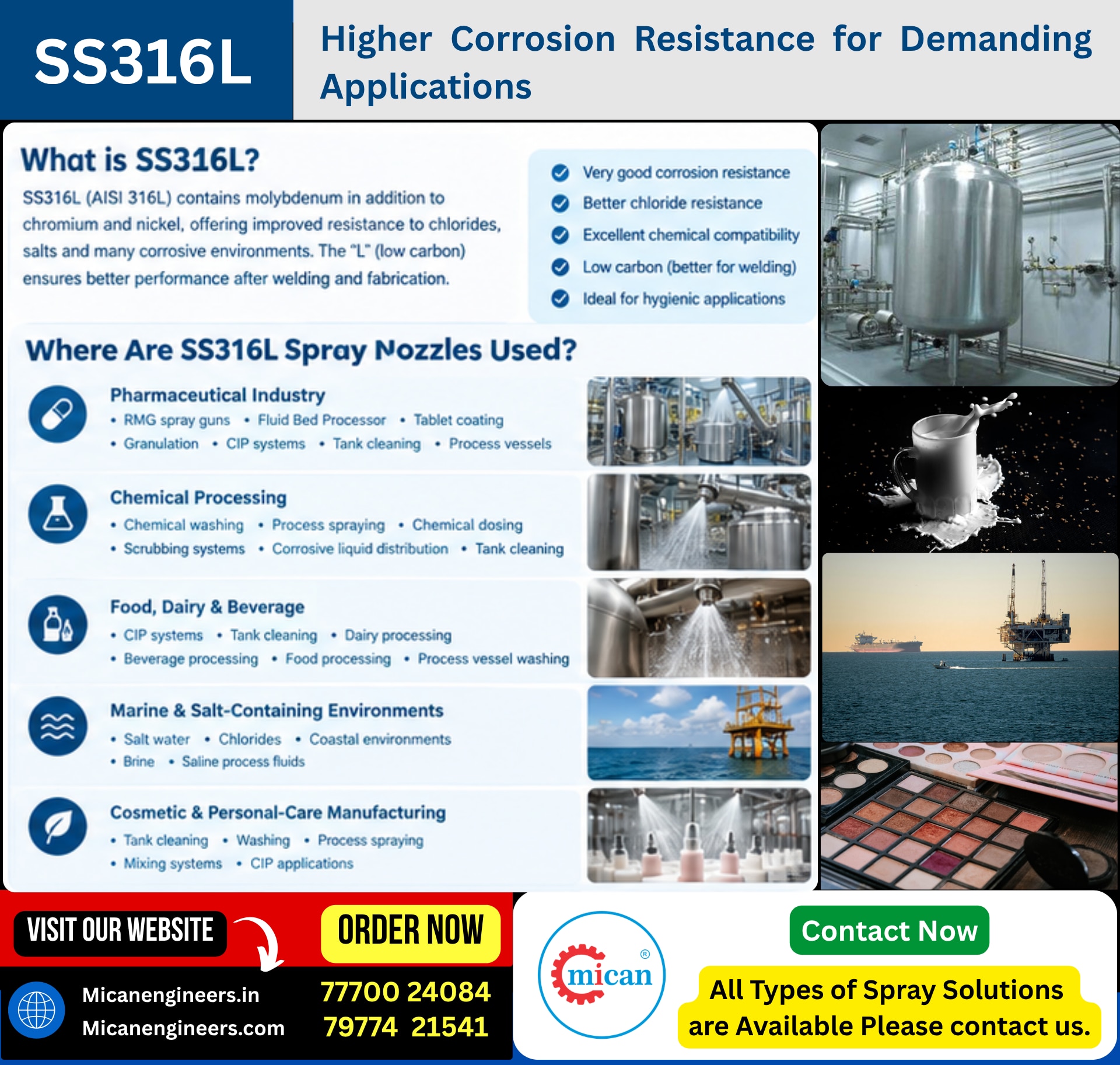
Where Are SS316L Spray Nozzles Used ?
SS316L is generally selected when the application requires improved corrosion resistance or a higher level of hygienic performance.
1. Pharmaceutical Industry
SS316L is widely used in pharmaceutical process equipment and spray systems.
Typical applications include :
- RMG spray guns
- Fluid Bed Processor spray systems
- Tablet coating
- Granulation
- CIP systems
- Tank cleaning
- Process vessels
- Pharmaceutical washing systems
In pharmaceutical equipment, material selection is especially important because surfaces may come into contact with process materials and cleaning agents.
2. Chemical Processing
SS316L can be preferred for spray applications involving corrosive process fluids.
Examples include :
- Chemical washing
- Process spraying
- Chemical dosing
- Scrubbing systems
- Corrosive liquid distribution
- Tank cleaning
The exact chemical compatibility must still be checked because SS316L is not resistant to every chemical or concentration.
3. Food, Dairy and Beverage Processing
SS316L is frequently used where higher corrosion resistance and hygienic design are required.
Applications include :
- CIP systems
- Tank cleaning
- Dairy processing
- Beverage processing
- Food processing
- Process vessel washing
Cleaning chemicals, elevated temperatures and repeated cleaning cycles can influence the material selection.
4. Marine and Salt-Containing Environments
SS316L generally performs better than SS304 in environments exposed to :
- Salt water
- Chlorides
- Coastal environments
- Brine
- Saline process fluids
This makes SS316L a common choice for applications where chloride exposure is a concern.
5. Cosmetic and Personal-Care Manufacturing
Spray nozzles used in cosmetic and personal-care production may require materials suitable for hygienic processing and cleaning.
Applications can include :
- Tank cleaning
- Washing
- Process spraying
- Mixing systems
- CIP applications
SS316L may be selected where improved corrosion resistance and hygienic requirements justify its use.
Why Does Chloride Exposure Matter ?
One of the most important differences between SS304 and SS316L is their performance in chloride-containing environments.
Chlorides can contribute to pitting and crevice corrosion in stainless steel. SS316L generally offers better resistance because of its molybdenum content.
For example, an application involving : Water + high chloride concentration + elevated temperature
may require more careful material selection than a simple freshwater application.
Therefore, simply specifying "stainless steel nozzle" is often not enough.
SS304 vs SS316L: Which One Should You Choose ?
A simple starting point is:
Choose SS304 when:
- The liquid is relatively non-corrosive
- The application is primarily water-based
- Chloride exposure is low
- General industrial service is required
- Cost optimization is important
- The operating environment is not highly aggressive
Consider SS316L when:
- Chloride exposure is higher
- The process involves corrosive fluids
- Pharmaceutical processing is involved
- Hygienic process equipment is required
- Frequent CIP cleaning is performed
- Food, dairy or beverage processing requires higher corrosion resistance
- Marine or saline conditions are present
Material Is Only One Part of Nozzle Selection :
Choosing between SS304 and SS316L is important, but it is not the only factor affecting spray-nozzle performance.
The nozzle should also be selected according to:
1. Spray Pattern
Different applications may require:
- Full Cone
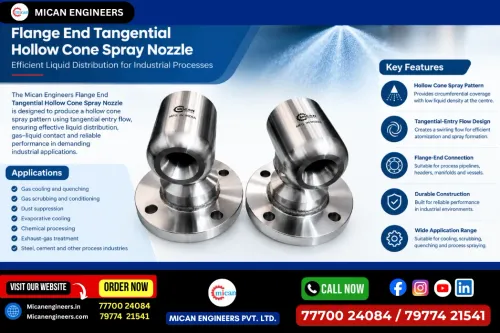
- Hollow Cone
- Flat Spray
- Straight Jet
- Spiral
- Air Atomizing
- Tank Cleaning
2. Flow Rate
The required liquid flow determines the appropriate nozzle orifice and nozzle size.
3. Operating Pressure
Nozzle performance depends on the available pressure. Flow rate generally changes with pressure, so the nozzle should be selected according to actual operating conditions.
4. Spray Angle
The spray angle determines coverage and should be selected according to the distance between the nozzle and target surface.
5. Temperature
High-temperature applications may require additional consideration of:
- Material compatibility
- Gaskets/seals
- Thermal expansion
- Process-fluid properties
6. Chemical Compatibility
Always evaluate the compatibility of the nozzle material with the actual:
- Chemical
- Concentration
- Temperature
- Exposure time
- Cleaning chemicals
Example: Choosing a Nozzle Material
Consider two applications.
Application A – General Water Cooling
Fluid: Water
Environment: General industrial
Chloride exposure: Low
Temperature: Moderate
An SS304 spray nozzle may be an economical and suitable choice, assuming the water chemistry is compatible.
Application B – Pharmaceutical Tank CIP
Fluid: Cleaning solution
Environment: Pharmaceutical process equipment
Frequent cleaning: Yes
Hygiene requirement: High
SS316L may be preferred because of its corrosion resistance and suitability for hygienic process equipment.
The final selection should still be confirmed against the actual cleaning chemicals, concentration and temperature.
SS304 vs SS316L: The Key Takeaway
There is no universal answer that SS316L is always better than SS304.
The correct material depends on the application.
SS304 → General industrial applications and less aggressive environments
SS316L → More demanding corrosion, chloride and hygienic applications
Selecting the right material can help improve nozzle service life, reliability, maintenance performance and overall process efficiency.
At Mican Engineers, spray nozzles can be selected according to application requirements including material, spray pattern, flow rate, pressure, spray angle, connection and operating conditions.
If you're unsure whether SS304 or SS316L is suitable for your application, evaluate the process fluid and operating conditions before finalizing the nozzle material.
#SprayNozzles #SS304 #SS316L #IndustrialSprayNozzles #SprayTechnology #IndustrialNozzles #PharmaceuticalIndustry #ChemicalIndustry #FoodProcessing #TankCleaning #CIP #SteelIndustry #MicanEngineers #ss304 #s316L #spraynozzlematerial #bestspraynozzlematerial
@mumbai @pune @chennai @ahmedabad