

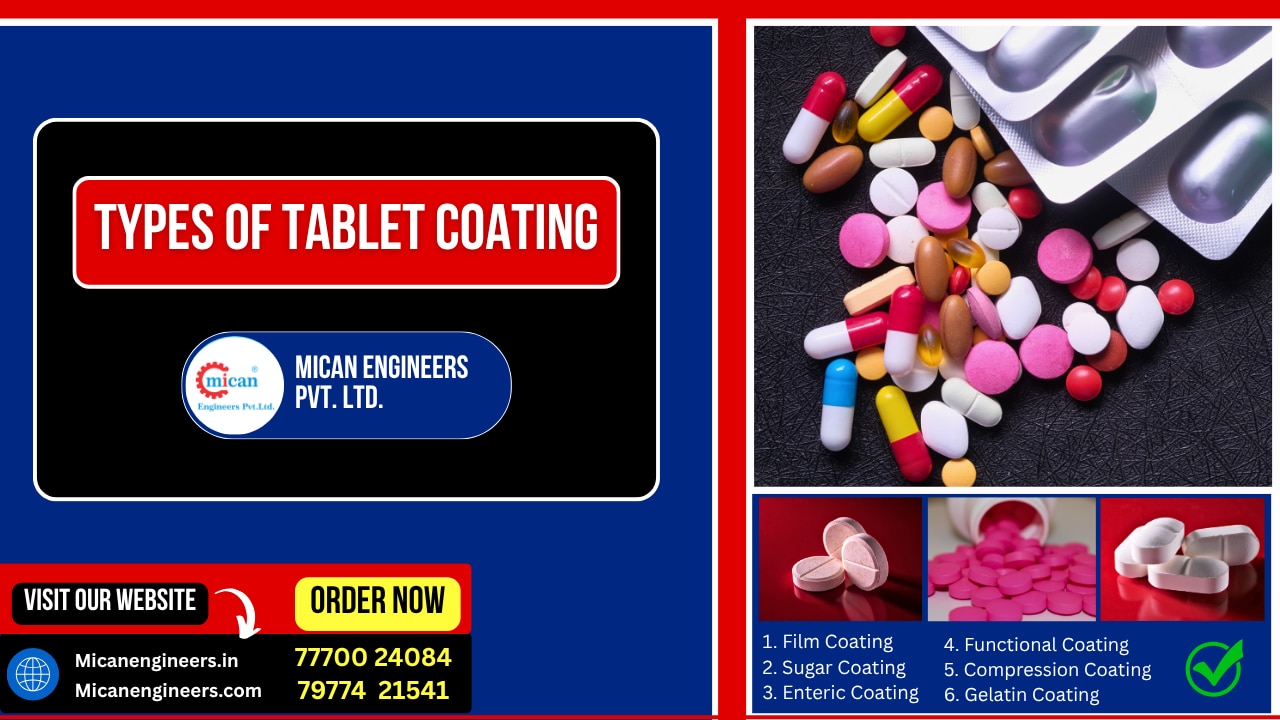
Types of Tablet Coating: A Complete Guide for Pharmaceutical Manufacturing
Tablet coating is a vital process in pharmaceutical manufacturing that enhances the appearance, stability, functionality, and patient acceptability of tablets. Beyond improving aesthetics, coatings can protect active ingredients, mask unpleasant tastes, control drug release, and improve product shelf life.
Selecting the appropriate coating type depends on the intended therapeutic purpose, formulation requirements, and manufacturing process. This article explores the most common types of tablet coating used in the pharmaceutical industry.
What is Tablet Coating?
Tablet coating is the process of applying a thin layer of coating material to the surface of a tablet. The coating may be applied for decorative, protective, or functional purposes and is typically performed using specialized tablet coating equipment equipped with precision spray guns.
1. Film Coating
Film coating is the most widely used tablet coating method in modern pharmaceutical manufacturing. A thin polymer-based film is sprayed onto the tablet surface to create a smooth, uniform coating.
Benefits of Film Coating
Improves tablet appearance
Masks unpleasant taste and odor
Enhances product stability
Protects against moisture and light
Allows controlled drug release
Faster processing compared to sugar coating
Applications
Film coating is commonly used for immediate-release, enteric-release, and modified-release pharmaceutical formulations.
2. Sugar Coating
Sugar coating is a traditional coating process that involves applying multiple layers of sugar-based syrup to tablets.
Benefits of Sugar Coating
Excellent taste masking
Attractive glossy appearance
Improved patient acceptance
Limitations
Time-consuming process
Significant increase in tablet weight and size
Higher production costs
Applications
Sugar coating is often used for chewable tablets and products requiring superior taste masking.
3. Enteric Coating
Enteric coating is a specialized coating designed to resist dissolution in the acidic environment of the stomach and dissolve in the intestinal environment.
Benefits of Enteric Coating
Protects acid-sensitive drugs
Prevents gastric irritation
Enables targeted drug delivery
Applications
Proton pump inhibitors
Enzyme formulations
Drugs sensitive to stomach acid
4. Modified Release Coating
Modified release coatings are designed to control the rate and timing of drug release after administration.
Types of Modified Release Coatings
Sustained Release (SR)
Controlled Release (CR)
Extended Release (ER)
Benefits
Reduced dosing frequency
Improved patient compliance
Consistent therapeutic effect
Applications
Widely used in cardiovascular, diabetic, and chronic disease medications.
5. Functional Coating
Functional coatings provide benefits beyond improving tablet appearance.
Functions Include
Moisture protection
Light protection
Taste masking
Odor masking
Improved swallowability
Enhanced product stability
Applications
Used when tablets require additional protection from environmental conditions.
6. Compression Coating
Compression coating, also known as dry coating, involves compressing a layer of coating material around a tablet core without using solvents.
Benefits
Suitable for moisture-sensitive drugs
Separates incompatible active ingredients
Enables dual-drug formulations
Applications
Bilayer tablets
Pulsatile drug delivery systems
Combination therapies
7. Gelatin Coating
Gelatin coating involves applying a thin gelatin layer to improve tablet appearance and ease of swallowing.
Benefits
Enhanced patient compliance
Improved swallowability
Smooth tablet finish
Applications
Commonly used for caplets and specialty oral dosage forms.
Choosing the Right Tablet Coating
The selection of a tablet coating depends on several factors, including:
Drug stability requirements
Desired release profile
Patient compliance considerations
Manufacturing efficiency
Product appearance requirements
Environmental protection needs
Each coating type offers unique advantages and must be carefully matched to the intended pharmaceutical application.
Importance of Spray Technology in Tablet Coating
Regardless of the coating type, achieving a uniform and defect-free coating requires precise control of atomization, spray pattern, droplet size, and coating distribution.
Improper atomization and spray distribution can lead to common coating defects such as:
Sticking and Picking
Orange Peel Effect
Mottling
Twinning
Bridging of Logos and Score Lines
Peeling and Flaking
Using high-quality tablet coating spray guns helps ensure consistent coating thickness, improved process efficiency, and superior product quality.
Conclusion :
Tablet coating is much more than an appearance-enhancing process. Whether the goal is taste masking, protection, controlled drug release, or enhanced stability, selecting the appropriate coating type is essential for pharmaceutical product success.
Film coating remains the most widely used method due to its efficiency and versatility, while specialized coatings such as enteric, modified-release, and compression coatings provide targeted functional benefits. Combined with precision spray technology and optimized process parameters, the right coating system can significantly improve product performance and manufacturing reliability.
