
Corrosion of Spray Nozzles : Causes, Problems, Prevention & Solutions
Industrial spray nozzles are designed to perform reliably in demanding environments, but one of the biggest challenges affecting their performance and lifespan is corrosion. Corrosion gradually damages the nozzle material, leading to changes in spray pattern, reduced efficiency, increased maintenance costs, and unexpected downtime.
Whether your spray nozzles are used in pharmaceutical manufacturing, chemical processing, food processing, steel plants, power plants, cement industries, or wastewater treatment, understanding corrosion and selecting the right nozzle material can significantly improve process reliability.
In this guide, we'll discuss the causes, signs, effects, prevention methods, and solutions for spray nozzle corrosion.
What is Spray Nozzle Corrosion ?
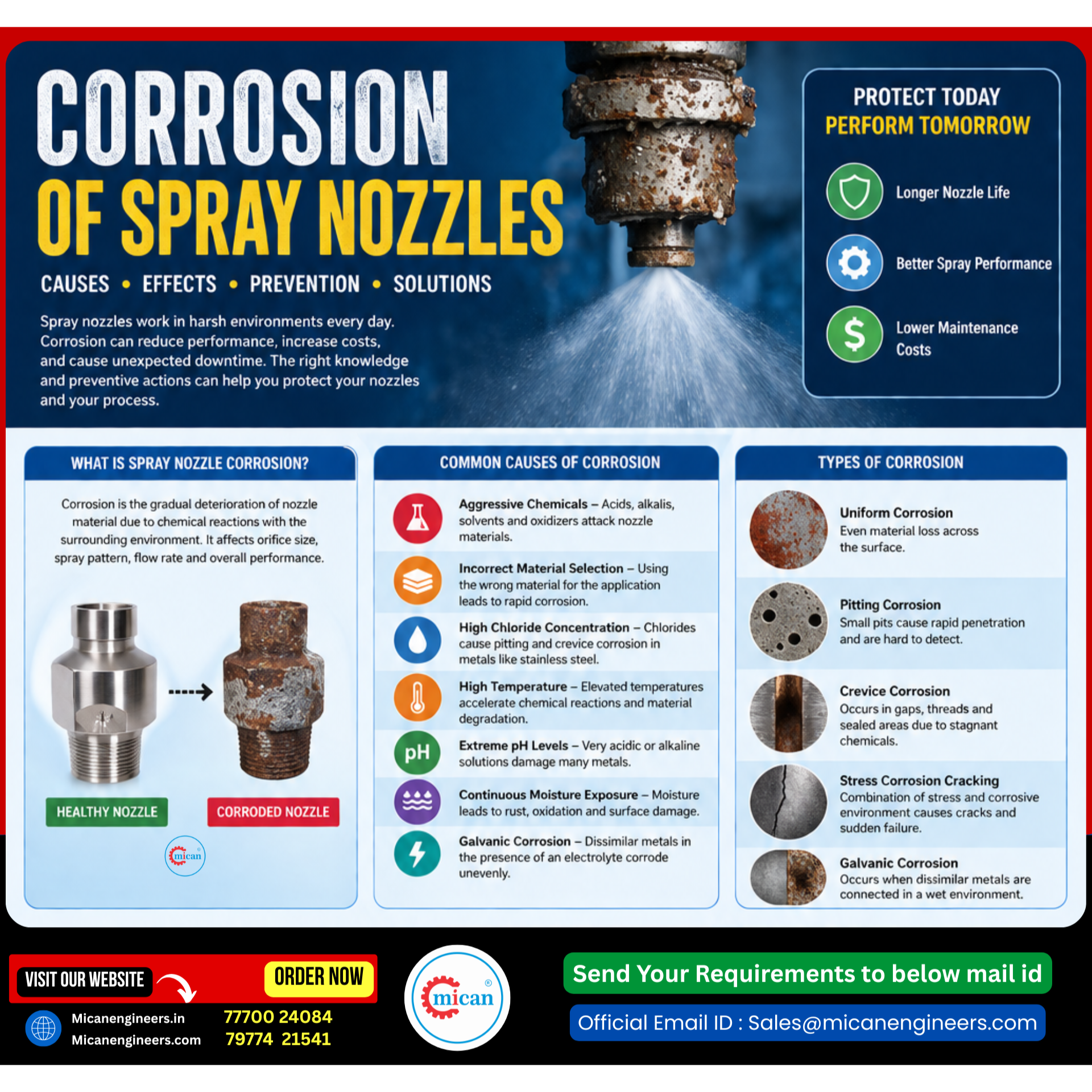
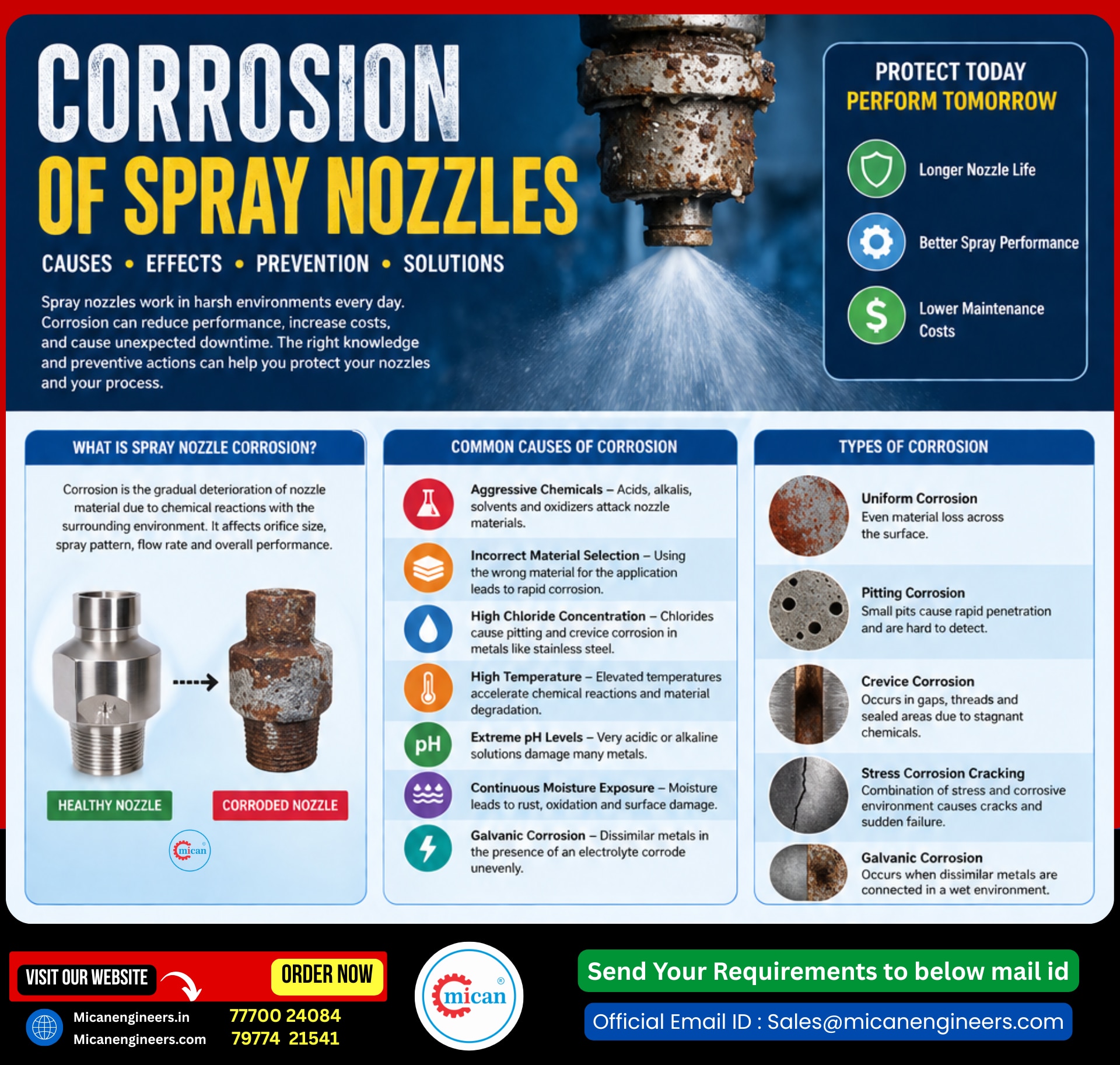
Spray nozzle corrosion is the gradual deterioration of the nozzle material caused by chemical reactions with the surrounding environment. Unlike wear caused by abrasive particles, corrosion is primarily caused by chemicals, moisture, temperature, pH variations, and environmental conditions.
As corrosion progresses, the nozzle orifice changes dimension, affecting:
- Spray angle
- Flow rate
- Droplet size
- Spray distribution
- Process efficiency
Eventually, the nozzle may fail completely.
Common Causes of Spray Nozzle Corrosion :
1. Aggressive Chemicals
Many industries spray:
- Acids
- Alkalis
- Solvents
- Cleaning chemicals
- Oxidizing agents
If the nozzle material is incompatible with these chemicals, corrosion begins rapidly.
Example:
A brass nozzle exposed to acidic chemicals may corrode within a short period.
2. Incorrect Material Selection
Choosing the wrong nozzle material is one of the most common reasons for premature corrosion.
For example:
- Brass performs poorly in many corrosive environments.
- SS304 may not be suitable for chloride-rich applications.
- Certain chemicals require SS316, Hastelloy, Titanium, or specialized plastics.
3. High Chloride Concentration
Chlorides are especially dangerous for stainless steel.
Common sources include:
- Salt water
- Marine environments
- Cooling towers
- Chemical plants
- CIP cleaning chemicals
These can cause:
- Pitting corrosion
- Crevice corrosion
- Surface damage
4. High Temperature
Higher temperatures accelerate chemical reactions.
Even chemicals that are relatively safe at room temperature may become highly corrosive when heated.
5. Extreme pH Levels
Very acidic or highly alkaline solutions attack many metals.
Repeated exposure gradually weakens the nozzle body and orifice.
6. Continuous Moisture Exposure
Even when chemicals are absent, continuous moisture can cause:
- Rust
- Oxidation
- Surface deterioration
This is common in:
- Cooling systems
- Humidification
- Outdoor installations
7. Electrochemical (Galvanic) Corrosion
When two dissimilar metals are connected in the presence of an electrolyte, galvanic corrosion occurs.
Example:
- Stainless steel nozzle connected to carbon steel piping
Over time, one of the metals corrodes faster.
Types of Corrosion Seen in Spray Nozzles :
1. Uniform Corrosion
Occurs evenly across the entire nozzle surface.
Characteristics:
- Predictable
- Slow material loss
- General thinning
2. Pitting Corrosion
Small localized holes develop on the nozzle.
Very dangerous because:
- Difficult to detect
- Rapid penetration
- Sudden failure
3. Crevice Corrosion
Occurs inside:
- Threads
- Gaskets
- Joints
- Sealed areas
Often caused by stagnant chemicals.
4. Stress Corrosion Cracking
Occurs due to the combination of:
- Tensile stress
- Corrosive chemicals
- Elevated temperature
Can lead to sudden nozzle failure.
5. Galvanic Corrosion
Occurs when different metals are electrically connected in a wet environment.
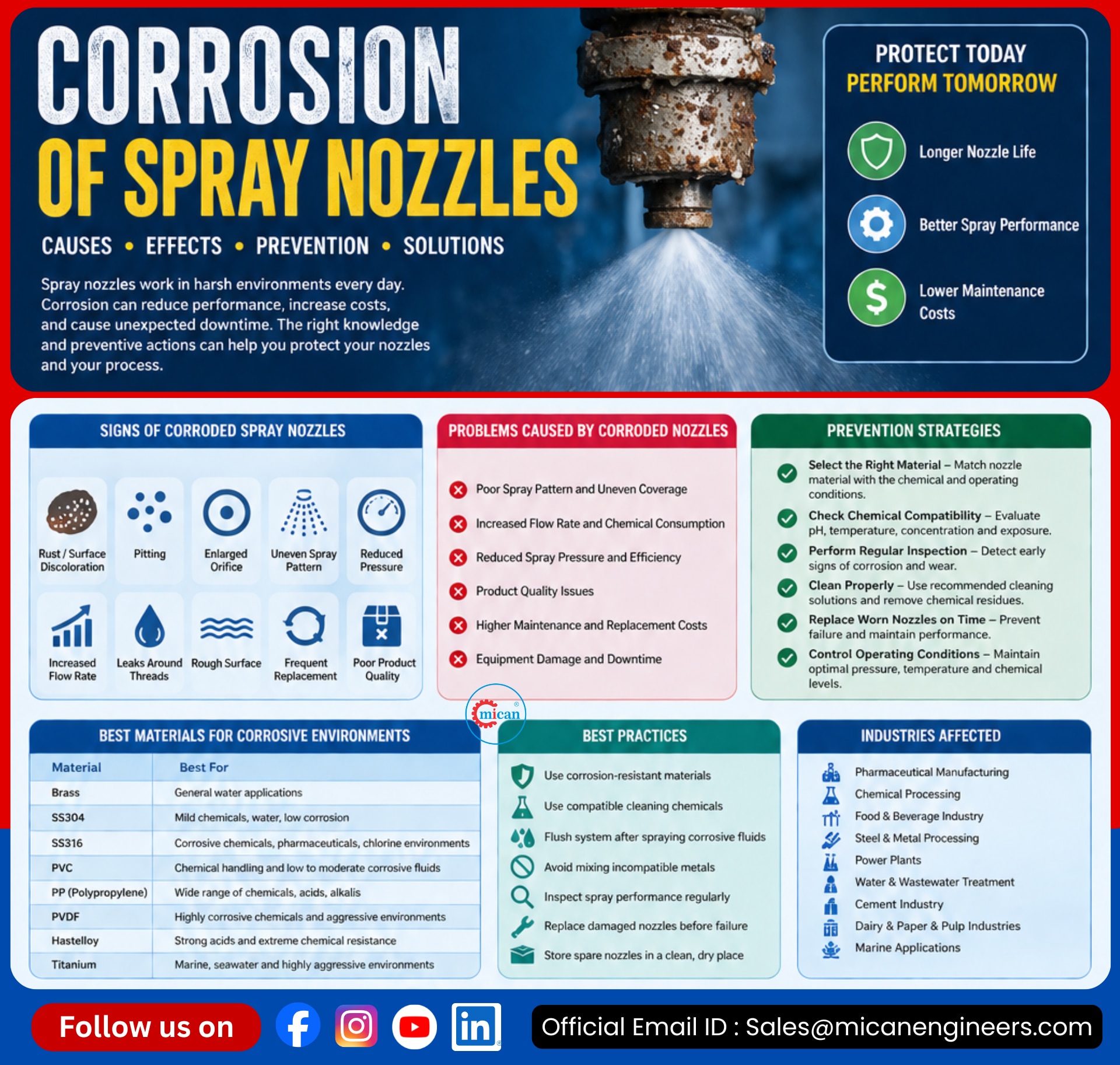
Signs That Your Spray Nozzle is Corroding :
Watch for these early warning signs:
- Rust spots
- Surface discoloration
- Pitting
- Rough nozzle surface
- Enlarged nozzle orifice
- Reduced spray pressure
- Uneven spray pattern
- Dripping after shutdown
- Increased flow rate
- Leakage around threads
- Visible cracks
- Frequent nozzle replacement
Problems Caused by Corroded Spray Nozzles
1. Poor Spray Pattern
Corrosion changes the orifice geometry.
Result:
- Uneven coverage
- Dead zones
- Poor atomization
2. Increased Flow Rate
As corrosion enlarges the orifice,
- More liquid passes through
- Chemical consumption increases
- Process becomes inconsistent
3. Reduced Spray Pressure
Damaged nozzles cannot maintain the intended spray characteristics.
4. Higher Chemical Consumption
Incorrect flow means:
- Product wastage
- Increased operating cost
5. Product Quality Issues
Especially critical in:
- Pharmaceutical manufacturing
- Food processing
- Surface coating
- Tablet coating
- Chemical dosing
6. Frequent Maintenance
Corroded nozzles require:
- More inspections
- More replacements
- Increased downtime
7. Equipment Damage
Improper spraying may affect:
- Pumps
- Pipelines
- Filters
- Production equipment
How to Prevent Spray Nozzle Corrosion ?
1. Select the Correct Material
Material selection is the first and most important step.
Common options include :
Material | Suitable Applications |
|---|---|
| Brass | General water applications |
| SS304 | Mild chemicals and water |
| SS316 | Corrosive chemicals and pharmaceutical industries |
| PVC | Chemical handling |
| (PP ) Polypropylene | Chemical spraying |
| PVDF | Highly corrosive chemicals |
| Hastelloy | Strong acids and aggressive chemicals |
| Titanium | Marine and highly corrosive environments |
2. Check Chemical Compatibility
Before installing a nozzle, review:
- Chemical composition
- Concentration
- Operating temperature
- pH level
- Exposure time
3. Perform Regular Inspection
Inspect nozzles for:
- Surface damage
- Rust
- Pitting
- Flow variation
- Spray pattern changes
Early detection reduces maintenance costs.
4. Clean Nozzles Properly
Avoid aggressive cleaning methods that can damage protective surfaces.
Instead:
- Use recommended cleaning solutions.
- Flush the system regularly.
- Remove chemical residues after production.
5. Replace Worn Nozzles on Time
Don't wait until complete failure.
Replacing a nozzle early often saves:
- Chemicals
- Energy
- Production time
- Maintenance costs
6. Control Operating Conditions
Where possible:
- Reduce excessive temperatures.
- Avoid stagnant chemicals.
- Maintain recommended pressure.
- Control solution concentration.
Best Practices for Long Nozzle Life
- Choose corrosion-resistant materials for the application.
- Use compatible cleaning chemicals.
- Flush systems after corrosive spraying.
- Avoid mixing incompatible metals.
- Inspect spray performance routinely.
- Replace damaged nozzles before they affect production.
- Store spare nozzles in a clean, dry environment.
Industries Most Affected by Spray Nozzle Corrosion
Corrosion is a common challenge in:
- Pharmaceutical Manufacturing
- Chemical Processing
- Food & Beverage Industry
- Dairy Plants
- Steel Plants
- Power Plants
- Cement Industry
- Paper & Pulp Industry
- Water Treatment Plants
- Wastewater Treatment Plants
- Marine Applications
- Fertilizer Plants
When Should You Replace a Corroded Spray Nozzle ?
Replace the nozzle immediately if you observe:
- Significant rust or pitting
- Cracks or structural damage
- Distorted spray pattern
- Increased flow rate beyond specification
- Persistent leakage
- Inconsistent atomization
- Reduced process efficiency despite cleaning
Timely replacement helps maintain product quality, process efficiency, and equipment reliability.
Conclusion :
Corrosion is one of the leading causes of spray nozzle failure, but it can often be prevented with the right material selection, regular maintenance, and proper operating practices. Ignoring early signs of corrosion can result in poor spray performance, higher operating costs, increased chemical consumption, and costly production downtime.
By selecting the appropriate nozzle material, ensuring chemical compatibility, and performing routine inspections, industries can maximize nozzle life and maintain consistent spray performance across critical applications.
Frequently Asked Questions (FAQs) :
1. What causes corrosion in spray nozzles?
The most common causes include aggressive chemicals, incorrect material selection, high temperatures, chloride exposure, extreme pH levels, and continuous moisture.
2. How can I identify a corroded spray nozzle?
Look for rust, discoloration, pitting, rough surfaces, enlarged orifices, leakage, and changes in the spray pattern or flow rate.
3. Which material is best for corrosive applications?
The best material depends on the process fluid. SS316 is suitable for many corrosive environments, while PVDF, Hastelloy, or Titanium may be required for highly aggressive chemicals.
4. Can corrosion affect spray quality?
Yes. Corrosion can alter the nozzle orifice, resulting in uneven spray distribution, poor atomization, higher flow rates, and inconsistent process performance.
5. How often should spray nozzles be inspected?
Inspect spray nozzles regularly as part of your preventive maintenance program. The inspection frequency depends on the application, chemical exposure, and operating conditions, but routine checks help detect corrosion early and prevent unexpected failures.
Hastags :
#SprayNozzles
#IndustrialSprayNozzles
#NozzleCorrosion
#CorrosionPrevention
#SprayNozzleMaintenance
#IndustrialMaintenance
#PreventiveMaintenance
#ProcessEngineering
#ChemicalProcessing
#PharmaceuticalManufacturing
#FoodProcessing
#WaterTreatment
#IndustrialEquipment
#EngineeringSolutions
#ManufacturingIndustry
#PlantMaintenance
#FluidHandling
#CorrosionResistance
#MicanEngineers
#SprayTechnology