
Nozzle Clogging in Spray Nozzles : Causes, Effects, and Effective Solutions
Spray nozzles play a vital role in industrial processes by ensuring precise liquid distribution, efficient atomization, and consistent spray performance. Whether used for cooling, coating, cleaning, humidification, lubrication, or dust suppression, the efficiency of a spray nozzle directly impacts product quality and operational productivity.
One of the most common issues affecting spray systems is nozzle clogging. Even a partially blocked nozzle can disrupt the spray pattern, reduce flow rate, increase downtime, and lead to unnecessary maintenance costs.
In this blog, we'll explore the causes of nozzle clogging, its impact on industrial processes, and practical solutions to prevent it.
What is Nozzle Clogging ?
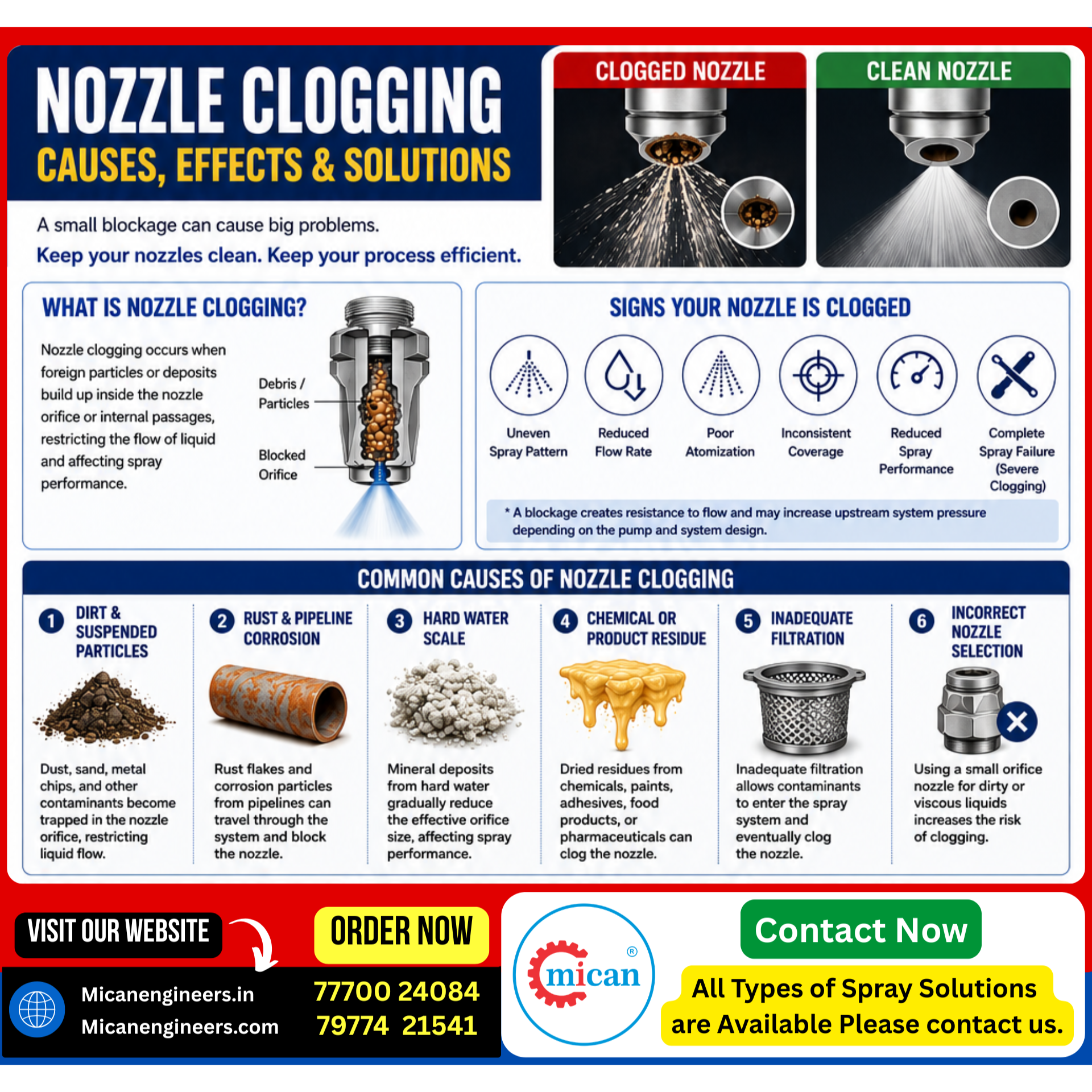
Nozzle clogging occurs when foreign particles or deposits accumulate inside the nozzle orifice or internal passage, restricting the flow of liquid. Depending on the severity of the blockage, clogging may result in reduced spray performance or completely stop the liquid flow.
Since spray nozzles are manufactured with precision-engineered orifices, even small particles can significantly affect their performance.
Common Causes of Nozzle Clogging :
1. Dirt and Suspended Particles
Dust, sand, metal chips, and other contaminants present in the liquid can become trapped inside the nozzle orifice. These particles gradually accumulate and restrict the liquid flow.
This is one of the most common causes of clogging in industrial spray systems.
2. Rust and Pipeline Corrosion
Older pipelines often release rust flakes or corrosion particles into the fluid. These particles travel through the system and can easily block small nozzle openings.
Regular inspection of piping systems can help minimize this issue.
3. Hard Water Scale
Water containing high levels of minerals such as calcium and magnesium can leave scale deposits inside the nozzle over time.
As these mineral deposits build up, they reduce the effective orifice diameter, affecting spray quality and flow rate.
4. Chemical or Product Residue
In industries handling chemicals, paints, adhesives, food products, or pharmaceuticals, liquid residues may dry inside the nozzle after operation.
If the system is not cleaned properly, these residues gradually harden and restrict liquid flow.
5. Inadequate Filtration
One of the leading causes of nozzle clogging is the absence of a proper filtration system.
Without suitable strainers or filters, contaminants enter the spray system and eventually block the nozzle.
Selecting the correct filter mesh size based on the nozzle orifice is essential for reliable performance.
6. Incorrect Nozzle Selection
Using a nozzle with a very small orifice in applications involving contaminated or viscous liquids increases the risk of clogging.
Choosing the right nozzle size and design for the application helps reduce maintenance and improves operational reliability.
Signs That Your Spray Nozzle is Clogged :
Early identification of clogging helps prevent production losses.
Common signs include:
Uneven spray pattern
Reduced flow rate
Poor atomization
Inconsistent spray coverage
Pressure increase within the system
Dry spots or incomplete coverage
Frequent maintenance requirements
If any of these symptoms appear, the spray nozzle should be inspected immediately.
Effects of Nozzle Clogging :
Ignoring nozzle clogging can lead to several operational problems.
1. Reduced Spray Performance
A blocked nozzle cannot distribute liquid evenly, resulting in inconsistent spray coverage.
2. Poor Product Quality
Processes such as coating, cleaning, cooling, humidification, or chemical application require uniform spraying. Clogged nozzles can cause uneven results, affecting the final product quality.
3. Increased Downtime
Frequent nozzle cleaning or replacement interrupts production and reduces operational efficiency.
4. Higher Maintenance Costs
Repeated maintenance, production stoppages, and premature nozzle replacement increase overall operating expenses.
5. Increased Energy Consumption
Many operators mistakenly increase pump pressure to compensate for reduced flow caused by clogging.
This does not remove the blockage and may increase energy consumption while placing additional stress on the pumping system.
How to Prevent Nozzle Clogging :
Preventive maintenance is the most effective way to avoid clogging and extend nozzle life.
1. Install the Correct Strainer or Filter
A properly selected line strainer prevents contaminants from reaching the nozzle.
The filter mesh should always be compatible with the nozzle orifice size.
2. Flush the System Regularly
Before starting production and after shutdown, flush pipelines to remove accumulated dirt, rust, and product residue.
This simple practice significantly reduces clogging.
3. Use Clean Process Water or Liquid
Filtered water or clean process liquids reduce contamination and improve spray consistency.
In applications using recycled water, additional filtration may be required.
4. Clean Nozzles Properly
- Routine cleaning removes deposits before they become permanent blockages.
- Always use soft cleaning brushes, compressed air, or manufacturer-recommended cleaning tools.
- Avoid using excessive force during cleaning.
Select the Right Nozzle
Choose the appropriate nozzle type, material, and orifice size based on:
Liquid properties
Particle size
Operating pressure
Flow rate
Application requirements
Proper nozzle selection reduces clogging and improves process efficiency.
Follow Preventive Maintenance
Establish a routine inspection schedule to check for:
Wear
Blockage
Flow consistency
Spray pattern quality
Replacing worn or damaged nozzles at the right time ensures consistent system performance.
Cleaning Tips: What You Should Avoid
Never clean a spray nozzle using:
Metal wires
Nails
Screwdrivers
Sharp pins
Drill bits
These objects can scratch or enlarge the precision orifice, permanently changing the spray pattern and flow characteristics.
Instead, use soft brushes, compressed air, ultrasonic cleaning (where applicable), or dedicated nozzle cleaning tools recommended by the manufacturer.
Best Practices for Long Nozzle Life
To maximize spray nozzle performance:
Install suitable filtration systems.
Keep process liquids clean.
Flush pipelines regularly.
Inspect nozzles periodically.
Clean nozzles using proper methods.
Replace worn nozzles before performance deteriorates.
Select nozzle materials compatible with the process fluid.
Following these practices helps improve process reliability while reducing maintenance costs and downtime.
Conclusion :
Nozzle clogging is a common yet preventable issue in industrial spray systems. Dirt, rust, scale, chemical residues, and inadequate filtration are among the primary causes of blockage. Left untreated, clogging can reduce spray quality, increase energy consumption, cause production delays, and raise maintenance costs.
By implementing proper filtration, routine cleaning, preventive maintenance, and selecting the right spray nozzle for your application, industries can achieve consistent spray performance, improved product quality, and longer equipment life.
At Mican Engineers, we offer a wide range of industrial spray nozzles and spray solutions designed for reliable performance across diverse industrial applications. Our team can help you select the right nozzle and filtration solution to minimize clogging and optimize your spray system for maximum efficiency.
keywords :
Nozzle Clogging, Spray Nozzle Clogging, Industrial Spray Nozzle, Spray Nozzle Maintenance, Spray Nozzle Cleaning, Spray Nozzle Troubleshooting, Industrial Spray Systems, Nozzle Filtration, Spray Pattern Problems, Industrial Spray Solutions
Tags :
#MicanEngineers #SprayNozzles #IndustrialSprayNozzles #NozzleClogging #SprayTechnology #IndustrialMaintenance #PreventiveMaintenance #ProcessEfficiency #Manufacturing #IndustrialEngineering